
From Projects to Possibility: Rethinking the Future of Coffee Farming

What will make coffee farming a future worth choosing?
For coffee-producing communities, this question goes far beyond yields. Climate change is altering growing conditions. Costs are rising. Young people are considering opportunities beyond farming. And farming families are balancing coffee with food security, education, health, household finances and other sources of income.
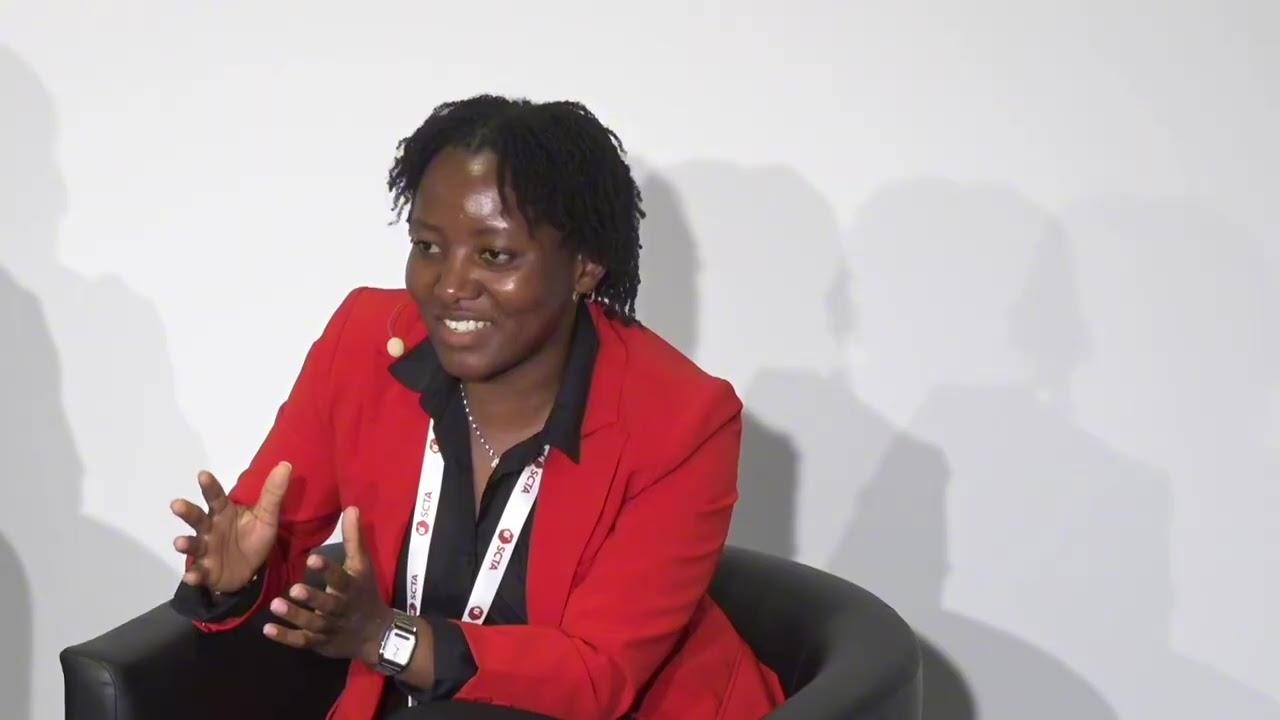
At the SCTA Forum 2026, during ICP’s 25th Anniversary session, this question was discussed by Kathrine Löfberg, Chair of the Board at Löfbergs, David M. Neumann, Group CEO Neumann Kaffee Gruppe, and Marystella Shirima, Agronomist at Hanns R. Neumann Stiftung Tanzania.
The discussion pointed towards a different way of thinking about the future of coffee farming. It starts not with a project, a technology or a production target, but with people, and with their ability to make choices about their future.

What does a resilient livelihood look like?
A more productive coffee farm is not necessarily a more secure household.
One of the central messages of the discussion at the SCTA Forum was that higher productivity alone does not automatically improve people’s lives. Farming families may harvest more coffee and still face difficulties paying for education, accessing healthcare, securing food throughout the year or coping with economic and environmental shocks.
Maristella Shirima described livelihood improvement in broader terms: economic stability, resilience, food security, access to healthcare and education, and diversified sources of income. Coffee can be an important part of that picture, but families also rely on activities such as livestock, poultry, vegetables and small businesses.

This perspective changes what success looks like.
As Rui Miguel Nabeiro, CEO of Delta Cafés, put it during his opening remarks, the focus needs to be “not the project, not the KPIs, but the farming family”. Success, he argued, is ultimately about whether “the next generation sees the future in coffee”.
For ICP, this means looking beyond production and asking whether families have more options, greater resilience and stronger foundations for the future.

Why does listening matter for coffee farming?
Starting with farming families also changes how solutions are designed.
The SCTA discussion highlighted the importance of listening to producers not simply as a consultation exercise, but as a way of determining what an appropriate intervention actually looks like.
David Neumann argued that producing countries and producers need a genuine role in deciding what is necessary for them to continue producing coffee.
ICP’s experience in Tanzania illustrates why that matters. A training on mulch application initially appeared relevant because mulching can help retain soil moisture and reduce weeds. But a needs-based assessment showed that local conditions changed the answer. In one area, termites made mulching unsuitable. In another, prolonged drought made it relevant. This lesson extends far beyond one agricultural practice.
Coffee-producing regions are not interchangeable. Farming systems, environmental conditions, household priorities, markets and local institutions differ. A solution that works well in one place may be ineffective somewhere else. For future-oriented development, that means adaptability is not a secondary consideration. It is part of the solution itself.

What makes change last after a project ends?
A project has a beginning and an end. A livelihood does not.
Kathrine Löfberg described the relationship between project teams and farmers using a coaching analogy: farmers are the players, while those supporting them help create the conditions for progress. She linked this to the ability of change to continue after projects end.
That makes the structures surrounding farming families particularly important. ICP’s experience includes work with farmer organizations, Farmer Field Schools, farmer-to-farmer learning and Village Savings and Loan Associations, alongside approaches that involve the wider household in planning and decision-making.
These structures matter because they can continue to provide knowledge, connections, services and opportunities after an individual project has finished.
What does the future of coffee look like for young people?
The future of coffee farming will ultimately depend on the choices of the next generation.
In Tanzania, ICP’s experience shows that young people can engage with coffee when farming is connected to wider opportunities. Farmer groups can provide access to networks and finance. Business skills can create opportunities beyond production alone. Links to other stakeholders can help young people see coffee as part of a broader entrepreneurial future.
But the goal should not simply be to persuade young people to remain in coffee. A stronger ambition is to create circumstances in which coffee becomes a genuine choice.
David Neumann made this distinction particularly clear in the session, arguing that young people should be able to choose coffee as an “educated choice”, as part of the life they want to build.
That requires looking beyond farm productivity to the wider conditions that shape young people's lives: education, opportunity, agency, community structures and the possibility of building a future that reflects their own ambitions.

What can the coffee sector learn from ICP?
What can the coffee sector learn from ICP?
ICP does not offer a universal blueprint for coffee farming. Its experience suggests something more useful: a way of working that can keep adapting.
Over time, approaches have evolved as needs have changed and as experience has accumulated. ICP has also created opportunities to share learning across countries and contexts, including South-to-South learning.
That is where ICP can serve as a sector role model: not because it has solved the future of coffee farming, but because it has developed a way of working that is designed to keep learning about it.
In his closing remarks, Michael Opitz, Managing Director of International Coffee Partners, described another part of that approach: long-term data, communities of practice and continued discussion with producers about what works, what helps and where further solutions are needed.
For the coffee sector, moving from projects to possibility means putting approaches at the center that can adapt to local realities, strengthen local structures and remain open to critical feedback and evidence.
Watch the video
Other Notes

Climate Change
Shade-Grown Coffee: A Practical Solution for Farmers in a Changing Climate

Climate Change
Family Businesses
Gender
ICP Annual Report 2025

Gender
Youth
Farmer Organizations
Family Businesses
Climate Change
Five Learnings from 25 Years of ICP
